|
Over time, that role has changed dramatically.
Modern crypto exchanges are increasingly becoming broader financial platforms offering combinations of:
* Cryptocurrency spot trading
* Derivatives
* Stablecoins and payments
* Staking and yield products
* Tokenized real-world assets
* Stocks and ETFs
* Commodity exposure
* Traditional financial products
* Institutional trading services
This evolution is important because crypto markets are highly cyclical. During strong bull markets, trading activity can be enormous. But during prolonged bear markets, trading volumes, speculative activity and exchange revenues can decline substantially.
This creates an important business question:
How can a crypto exchange remain financially sustainable when the crypto market enters a prolonged bear marketæ
One answer emerging in 2026 is diversification into traditional financial markets.
Rather than remaining exclusively a "crypto exchange," the platform can evolve into an everything exchange—a single financial interface through which customers can access multiple asset classes.
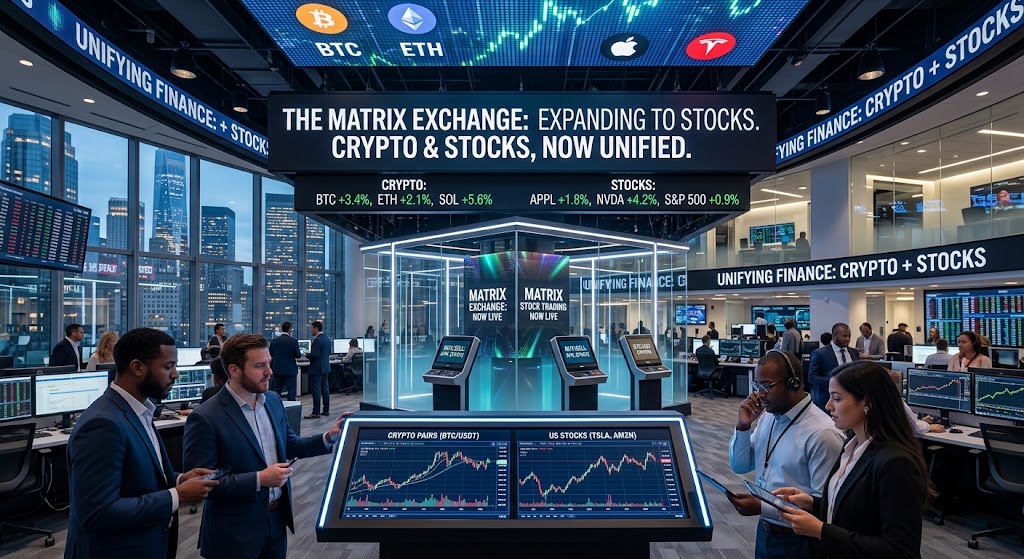
Crypto exchanges are evolving from platforms focused only on buying and selling crypto into broader financial marketplaces offering stocks, ETFs, derivatives, payments and tokenized real-world assets. This diversification helps exchanges survive bear markets by reducing dependence on crypto trading volume and creating new revenue sources when crypto activity declines.
This evolution may also provide clues about market maturity. As a case study, CryptoQuant (@cryptoquant_com) highlighted falling Bitcoin Short-Term Holder (STH) Supply. This can be constructive because short-term speculators may be exiting while coins move toward longer-term holders, potentially reducing selling pressure. Historically, extreme STH levels have appeared around capitulation and accumulation phases.
However, falling STH Supply alone does not prove a bear-market bottom. Stronger confirmation comes from combining it with declining selling pressure, increasing long-term-holder accumulation, improving price structure, liquidity and renewed demand.
Posted on: Aug 14 2026
|